
A Word to the Wise: Tips for Publishing in International Journals
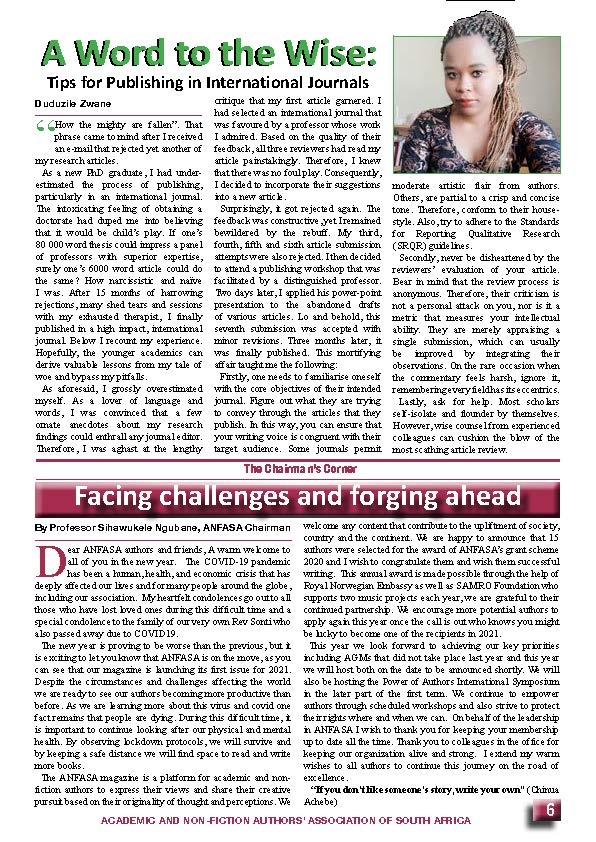 “How the mighty are fallen”. That phrase came to mind after I received an e-mail that rejected yet another of my research articles. As a new PhD graduate, I had underestimated the process of publishing, particularly in an international journal. The intoxicating feeling of obtaining a doctorate had duped me into believing that it would be child’s play. If one’s 80 000 word thesis could impress a panel of professors with superior expertise, surely one’s 6000 word article could do the same? How narcissistic and naïve I was. After 15 months of harrowing rejections, many shed tears and sessions with my exhausted therapist, I finally published in a high impact, international journal. Below I recount my experience. Hopefully, the younger academics can derive valuable lessons from my tale of woe and bypass my pitfalls. As aforesaid, I grossly overestimated myself.
As a lover of language and words, I was convinced that a few ornate anecdotes about my research findings could enthrall any journal editor. Therefore, I was aghast at the lengthy Duduzile Zwane critique that my first article garnered. I had selected an international journal that was favoured by a professor whose work I admired. Based on the quality of their feedback, all three reviewers had read my article painstakingly. Therefore, I knew that there was no foul play. Consequently, I decided to incorporate their suggestions into a new article. Surprisingly, it got rejected again. The feedback was constructive, yet I remained bewildered by the rebuff. My third, fourth, fifth and sixth article submission attempts were also rejected. I then decided to attend a publishing workshop that was facilitated by a distinguished professor. Two days later, I applied his power-point presentation to the abandoned drafts of various articles. Lo and behold, this seventh submission was accepted with minor revisions.
Three months later, it was finally published. This mortifying affair taught me the following: Firstly, one needs to familiarise oneself with the core objectives of their intended journal. Figure out what they are trying to convey through the articles that they publish. In this way, you can ensure that your writing voice is congruent with their target audience. Some journals permit moderate artistic flair from authors. Others, are partial to a crisp and concise tone. Therefore, conform to their housestyle. Also, try to adhere to the Standards for Reporting Qualitative Research (SRQR) guidelines. Secondly, never be disheartened by the reviewers’ evaluation of your article. Bear in mind that the review process is anonymous. Therefore, their criticism is not a personal attack on you, nor is it a metric that measures your intellectual ability. They are merely appraising a single submission, which can usually be improved by integrating their observations. On the rare occasion when the commentary feels harsh, ignore it, remembering every field has its eccentrics. Lastly, ask for help. Most scholars self-isolate and flounder by themselves. However, wise counsel from experienced colleagues can cushion the blow of the most scathing article review.
Duduzile Zwane
Click here to download article